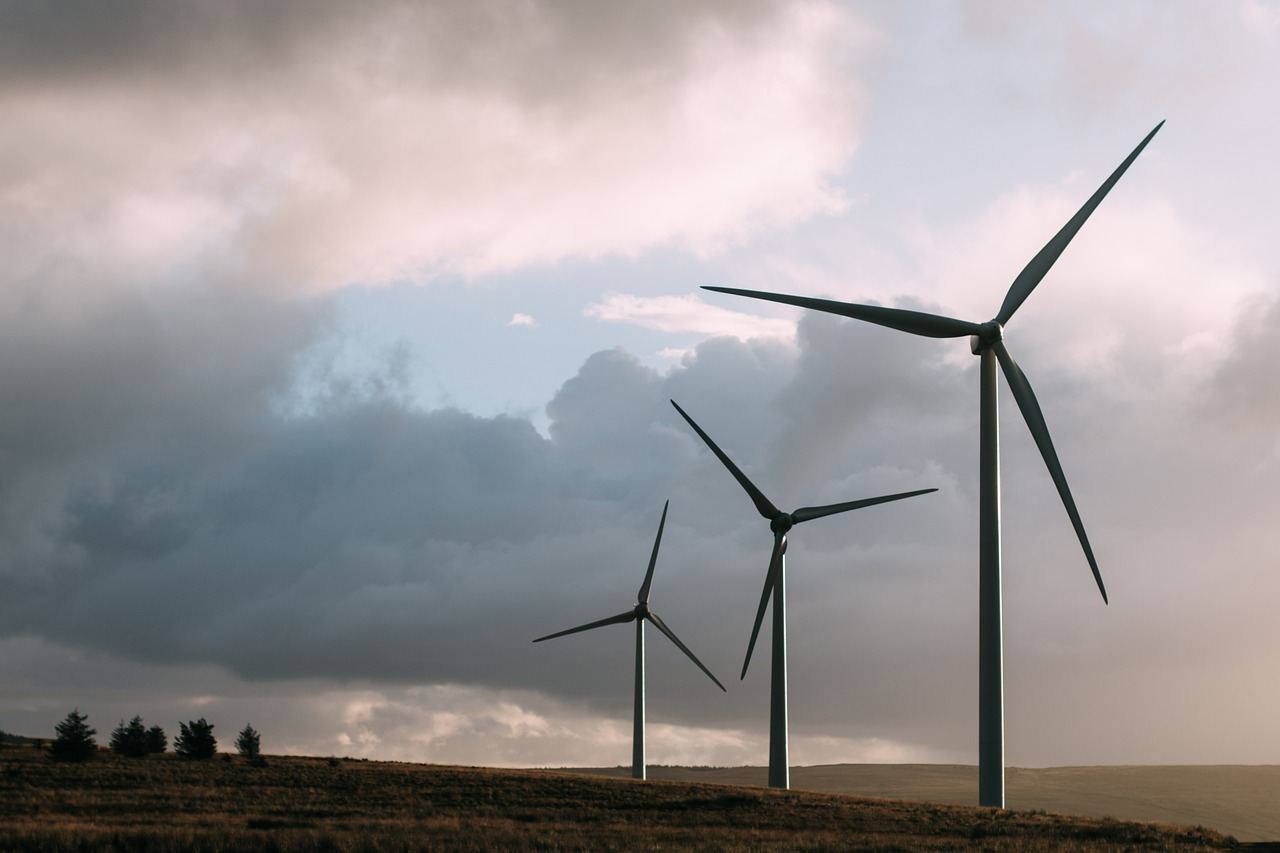
You may have wondered, how do wind turbines work, as you passed one on the road. In short, moving air turns the blades, and the blades spin a generator that makes electricity.
This page is one part of the wider topic of renewable energy, and it focuses on the machine itself.
| Item | Value |
|---|---|
| Typical number of blades | Three blades on a tubular steel tower |
| Gearbox speed-up | About 18 revolutions a minute to roughly 1,800 revolutions per minute |
| Rotor speed the controller allows | No more than 55 mph |
| Homes served by a typical 2.8-megawatt turbine | Just under 1,000 American homes |
These figures come from the U.S. Department of Energy’s How a Wind Turbine Works explainer and its What Is Wind Energy? page. They can change, so check the sources before you rely on them.
The basic idea: turning moving air into electricity
A wind turbine converts the kinetic energy in moving air into electricity. The Department of Energy describes it as using the turning motion of blades, pushed by moving air, to produce electrical energy, as set out on its WindExchange page.
The whole process follows a short chain:
- Wind blowing above the ground pushes the blades at the top of the tower.
- The turning rotor drives the machinery in the nacelle, the head of the turbine.
- A generator just downwind from the rotor spins and produces electricity.
- Cables carry the electricity onward to where it is used.
Inside the turbine: blades, gearbox and nacelle
Blades and the lift that turns them
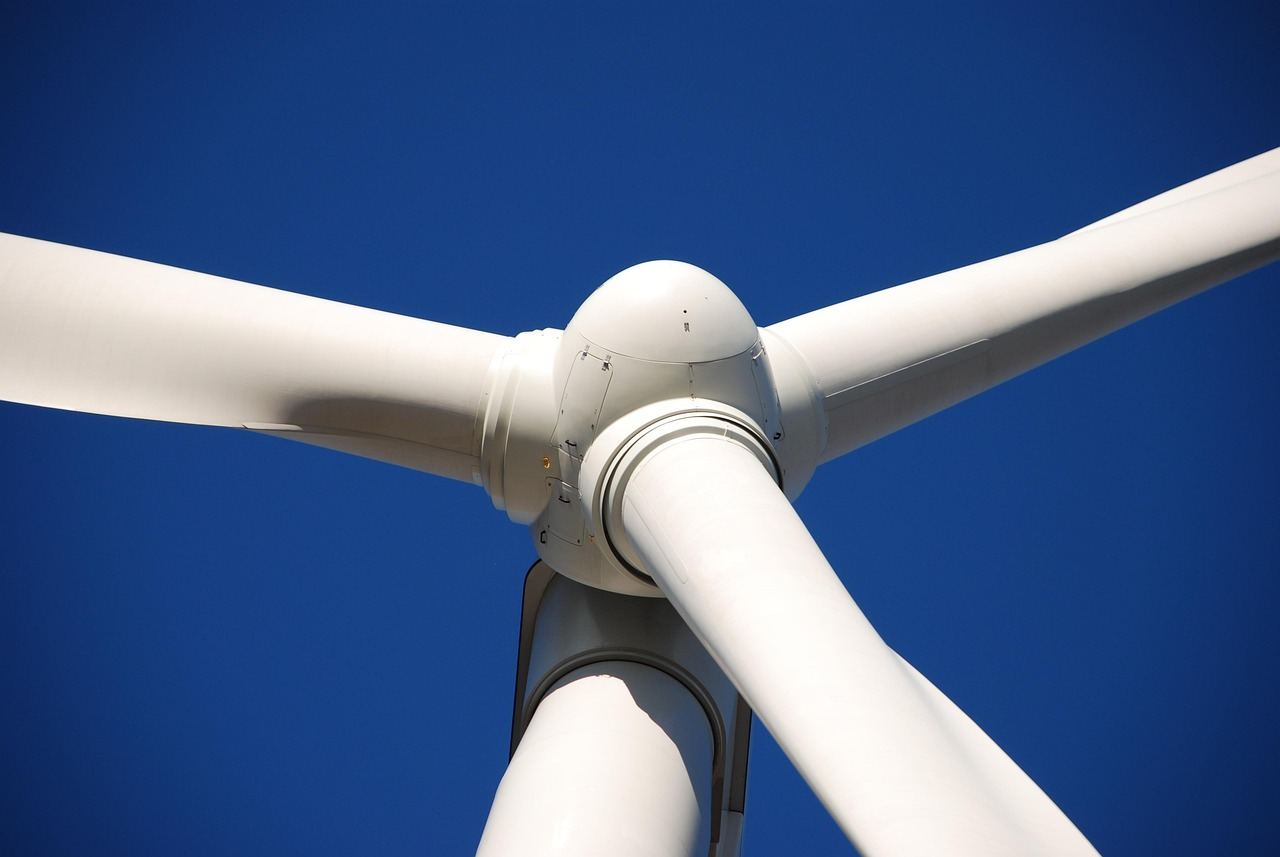
Turbine blades are propeller-like and act much like an airplane wing, according to the DOE’s How a Wind Turbine Works explainer. When the wind blows, a pocket of low-pressure air forms on one side of each blade and pulls the blade toward it.
That pull is called lift, and it is much stronger than drag, the wind’s force against the front of the blade. The combination of lift and drag causes the rotor to spin like a propeller, as the same DOE explainer notes.
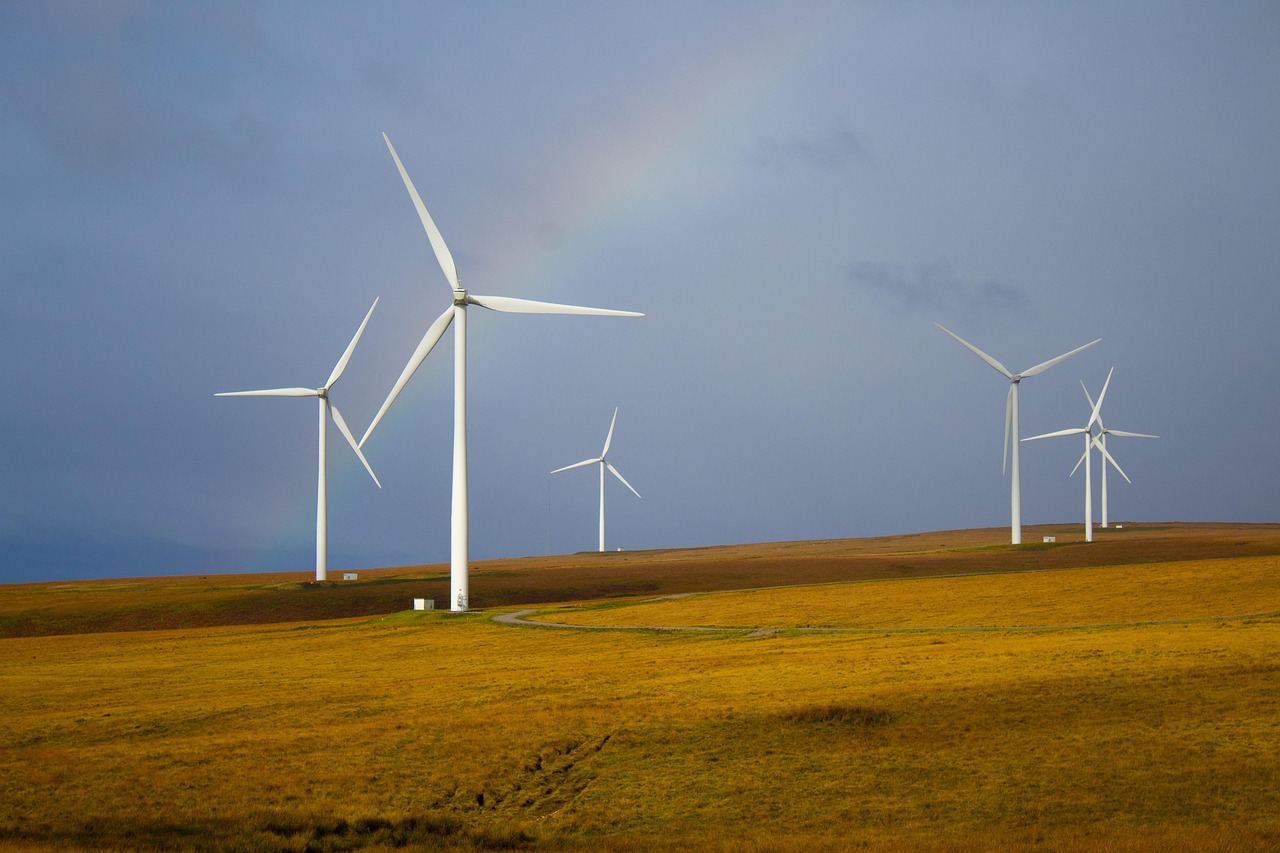
The majority of wind turbines have three blades mounted on a tubular steel tower. A tower of 100 feet or more above the ground lets the turbine reach the faster wind speeds found at higher altitudes, as the DOE explains.
Gearbox and generator
The rotor itself turns slowly. A series of gears raises its speed from about 18 revolutions a minute to roughly 1,800 revolutions per minute, which is fast enough for the generator to produce AC electricity, per the DOE.
Nacelle, controller and brake
The nacelle is the streamlined housing on top of the tower, and it holds the key working parts. According to the DOE, some nacelles are large enough for a helicopter to land on.
Several supporting parts keep the machine safe and pointed the right way:
- Anemometer: measures wind speed continuously and passes the data to the controller.
- Brake: housed in the nacelle, it stops the rotor in emergencies by mechanical, electrical or hydraulic means.
- Yaw drive and motor: on upwind turbines, they turn the nacelle so the rotor keeps facing the wind when its direction changes.
The controller reads that wind data and keeps rotor speeds from exceeding 55 mph, which protects the turbine from damage in high winds, according to the DOE.
Horizontal-axis and vertical-axis designs
There are two basic types of wind turbine, and the horizontal axis design dominates. It is a propeller-style layout with blades that rotate around a horizontal axis, per the DOE explainer.
Horizontal-axis machines come in two layouts:
- Upwind: the wind hits the blades before it reaches the tower.
- Downwind: the wind hits the tower before it reaches the blades.
Vertical-axis turbines have several manufacturers. Even so, they have not penetrated the utility-scale market, meaning 100 kW capacity and larger, to the same degree as horizontal-axis machines, according to the DOE.
How much power does a wind turbine produce?
Size matters most. A typical 2.8-megawatt utility-scale turbine could produce enough electricity to power just under 1,000 American homes, according to the WindExchange page. It adds that turbine size typically determines how much energy a machine can produce.
Another yardstick is capacity factor, a measure of power plant productivity. DOE’s Wind Turbine Technology page reports an average rising from 22% for turbines installed before 1998 to nearly 35%, up from 30% in 2000.
The same page says costs fell from over 55 cents per kilowatt-hour in 1980 to under 3 cents per kWh in the United States. That page also states that it describes a research effort that is no longer active, so treat its figures as a snapshot rather than a live reading.
Blade design contributes as well. A blade developed with Sandia National Laboratories led to an increase in energy capture by 12%, and its gently curved tip is designed to take advantage of slower wind speeds, per the same DOE page.
Wind turbines are not windmills
The two are often confused. A windmill traditionally uses wind to turn blades that rotate a grinding stone, rather than a generator, to turn grain into powder such as flour, according to the DOE.
For a different approach to clean power, see the explainer on how do solar panels work. The guide to hydropower covers another way of generating electricity from a natural flow.
Frequently asked questions
Can one turbine power a single farm, or must it join the grid?
Show answer
Either works. The DOE says a turbine can serve a specific need, such as a streetlight or an isolated farm, or it can contribute to the electric grid that supplies homes, businesses and schools. Installations of the first kind are typically used by a community, company, utility or homeowner, per the WindExchange page.
Do wind projects need approval before they are built?
Show answer
Grid-connected projects need utility approvals, and sometimes grid impact studies, before construction starts. Permitting and zoning rules apply as well, whatever the size of the project, according to the DOE.
Can wind be paired with other energy sources?
Show answer
Yes. Plants that combine several forms of energy are called hybrid power plants. The DOE notes that turbines and energy storage devices can complement each other to improve reliability and output.
How long have people used wind for power?
Show answer
For millennia. Egyptians used wind to push boats along the Nile as early as 5000 B.C., and American colonists relied on windmills to grind grain, pump water and cut wood at sawmills, per the DOE explainer.