Wondering how do solar panels work before you commit a roof to them? Panels use a semiconductor, usually silicon, to knock electrons loose with sunlight, and an inverter turns that current into the AC your home uses.
This explainer sits within our wider guide to renewable energy.
| Item | Value |
|---|---|
| Typical residential rooftop system | About 30 modules |
| Power from a single cell | A few watts |
| Single-crystal module efficiency (some lab tests) | Up to 23 percent |
| Polycrystalline top module efficiency | Close to 20 percent |
| Thin film share of the global PV market | Around ten percent |
| First Bell Labs silicon cells (1950s) | Four percent of sunlight energy converted |
These figures come from the U.S. Department of Energy and the Union of Concerned Scientists. Figures can change, so check the sources before you rely on them.
What happens inside a solar cell?
A solar cell contains a semiconductor, a material that conducts electricity only when energy is supplied, here by sunlight. Its conductivity sits below that of a metal but above that of an insulator, as the DOE primer explains.
The journey from light to household power follows a short chain:
- Sunlight reaches the semiconductor, which absorbs the light and passes its energy to electrons.
- Other layers in the cell are designed to draw those electrons out as an electric current.
- The current moves through the metal contacts, the grid-like lines you can see on a cell.
- An inverter converts the direct current (DC) into alternating current (AC).
- The AC flows to the electric grid and to the circuit that feeds your home.
Nothing is burned and nothing moves. The DOE notes that generation carries on for as long as light reaches the module and the circuit stays connected.
Why silicon and doping matter
The main semiconductor in solar cells is silicon, an abundant element that is also found in sand. It is therefore inexpensive, though it must be refined in a chemical process before it becomes crystalline silicon that can conduct, per the DOE.
On its own, crystallized silicon is a poor conductor. Makers add impurities on purpose, a step called doping, to set the stage for a current, according to the UCS explainer.
- The bottom layer is usually doped with boron, which encourages a positive charge and makes it the p-type layer.
- The top layer is doped with phosphorus, which encourages a negative charge and makes it the n-type layer.
- The boundary between them is called the P-N junction.
Electron movement at that junction creates an electric field. Sunlight knocks electrons loose in both layers, but the field blocks the direct route between them. The electrons instead take the external circuit, typically thin wires along the top of the n-type layer, and that flow is the electricity you can use (UCS).
From cells to modules to your home’s circuit
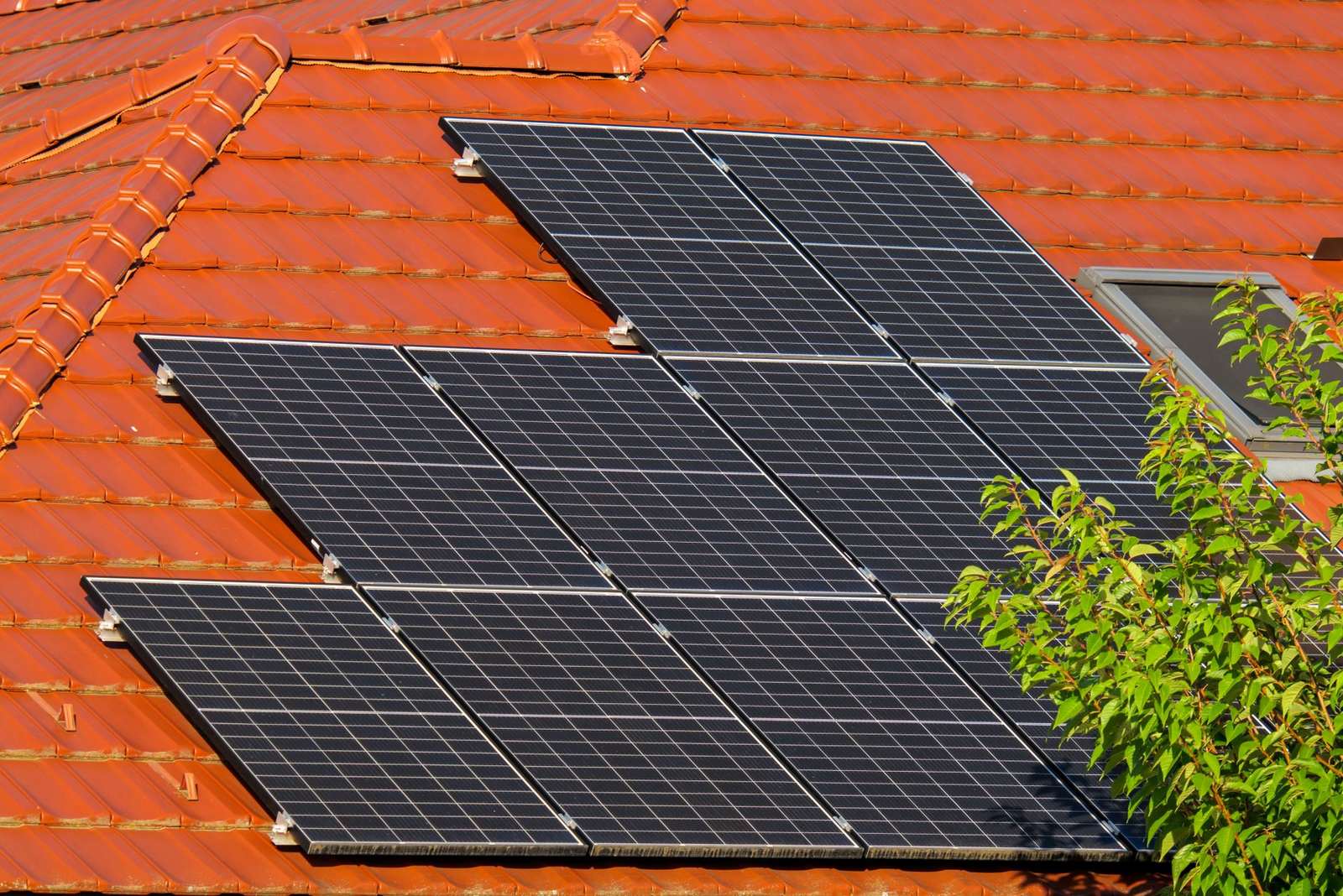
One cell on its own is small. The UCS says each one generates very little power, a few watts, so cells are grouped into modules, also called panels, which can be used alone or joined into larger arrays.
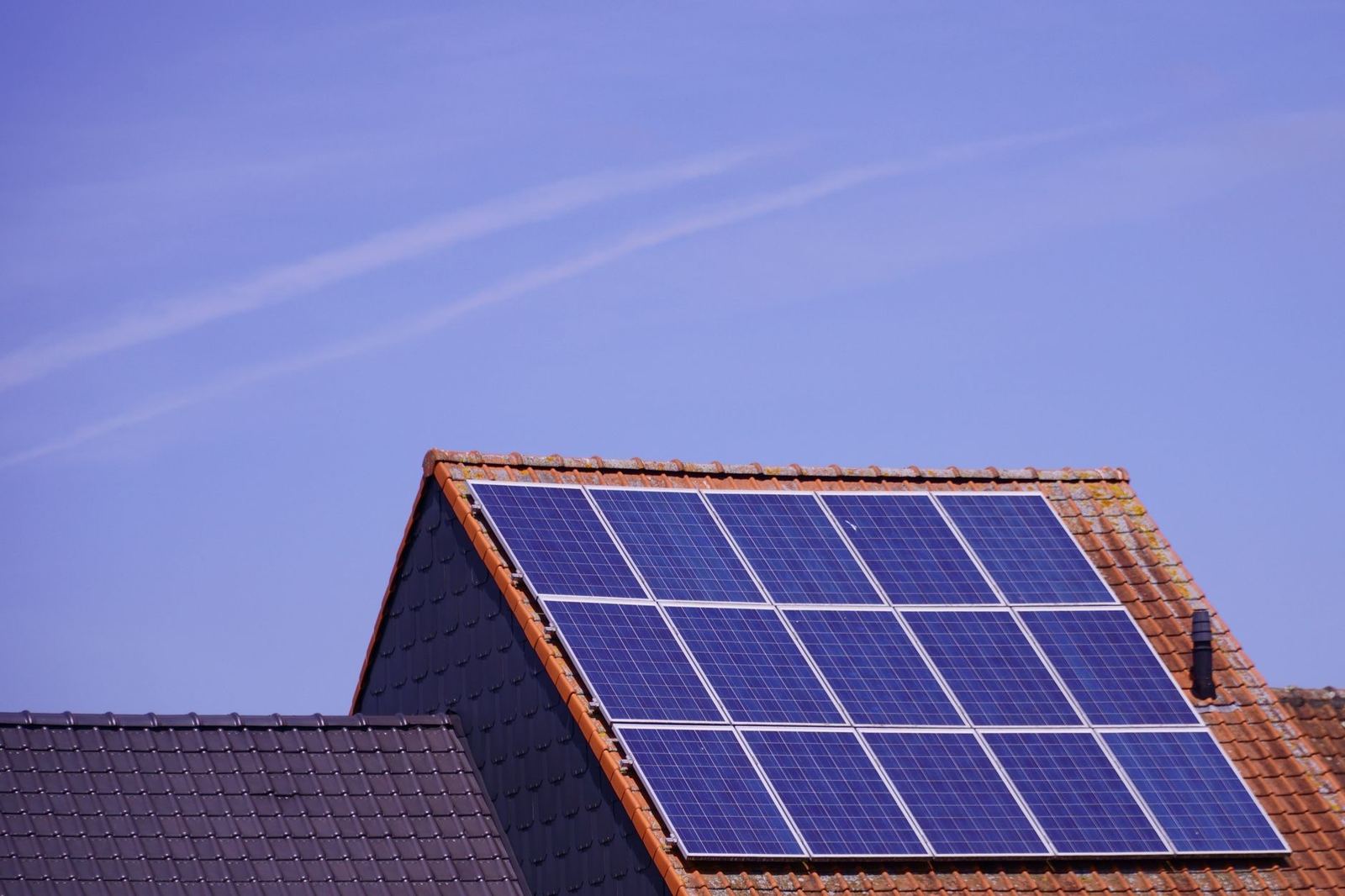
The DOE describes the same ladder: cells strung together make a module, and connected modules make a solar system. A typical residential rooftop system has about 30 modules.
Between the panels and your outlets sits the inverter. Panels deliver direct current, and the inverter’s job is to change it to the alternating current that the grid and your household wiring work with.
If you want to compare this silent, moving-part-free process with a mechanical one, our explainer on how do wind turbines work covers the other big clean electricity source.
Three types of solar cells
Not every panel is built the same way. The UCS explainer groups cells into three basic types, and the choice trades cost against efficiency, meaning how much incoming sunlight becomes electricity.
- Single-crystal: cut as wafers from long cylinders, an energy-intensive process that uses more material but gives the highest efficiency, up to 23 percent for modules in some laboratory tests. It holds a little over one third of the global market (UCS).
- Polycrystalline: molten silicon cast into ingots and sliced into squares. Costs are lower and top module efficiencies come close to 20 percent, and these cells make up around half of the global market (UCS).
- Thin film: materials such as amorphous silicon or cadmium-telluride sprayed or deposited onto glass or metal, building the whole module at once. Efficiency is lower but cost can be too, and thin film is around ten percent of the global market (UCS).
The market shares come from an older UCS explainer, so treat them as a snapshot rather than a current ranking. Laboratory efficiencies are also best-case numbers for modules, not a promise for your roof.
What lowers real-world output
In the lab, a module’s ability to turn light into power is called photovoltaic conversion efficiency. Outdoors, the DOE lists several things that can reduce it:
- Heat
- Dirt on the surface
- Shade
Researchers are working on fixes, according to the same DOE primer. Backsheets on the panels can lower their operating temperature, and new cell designs can capture more light, which raises energy yield, the electricity a system produces over time.
One design under study is the bifacial cell, which is double-sided so it can also collect light reflected from the ground or roof beneath it. Because solar works so differently from burning fuel, it features in any comparison of renewable vs nonrenewable energy.
A short history of the photovoltaic cell
The idea is older than most people expect. The UCS explainer gives three milestones:
- In 1839, French scientist Edmond Becquerel found that certain materials gave off sparks of electricity when struck by sunlight.
- The first photovoltaic cells, made of selenium, appeared in the late 1800s after researchers saw that this photoelectric effect could be harnessed.
- In the 1950s, scientists at Bell Labs used silicon to make cells that converted four percent of the energy in sunlight into electricity.
From that modest four percent start, the silicon cell became the standard design that the DOE still describes as the market leader.
Frequently asked questions
Do solar panels need direct sunlight to work?
Show answer
The sources say a module generates electricity whenever sunlight reaches it and the circuit is complete. Neither gives output figures for cloudy days, so ask an installer for a local estimate that accounts for shade and weather.
Why is an inverter needed at all?
Show answer
A cell’s output is direct current, while the grid and your home’s electrical system run on alternating current. The inverter bridges the two, as the DOE primer describes.
Which type of cell is the most efficient?
Show answer
Single-crystal cells, which the UCS credits with the highest efficiency of the three basic types. They cost more in energy and materials to make, which is why lower-cost alternatives still hold large market shares.
Are bifacial panels worth it?
Show answer
The evidence is not settled. The DOE says the jury is still out on how bifacials affect energy yield, and that funded projects are building baseline metrics to measure their gains.