Wondering whether the ground under your feet could power or heat your home? Geothermal energy taps heat from the earth, using wells to bring up steam and hot water for electricity, heating and cooling.
This guide is part of our look at renewable energy, where geothermal sits alongside other sources.
| Item | Value |
|---|---|
| U.S. conventional geothermal summer capacity | 2.7 gigawatts (GW) |
| Share of U.S. summer generating capacity | 0.2% |
| Reservoir temperatures used for power | 300°F to 700°F |
| Cape Generating Station planned maximum capacity | 53 megawatts (MW) |
| USGS enhanced geothermal estimate, Great Basin | 135 GW |
| DOE-cited U.S. geothermal electricity potential by 2050 | 90 gigawatts |
These figures come from the U.S. Energy Information Administration’s February 19, 2026 analysis and the U.S. Department of Energy’s Geothermal Basics page. Figures can change, so check the sources before you rely on them.
What is geothermal energy?
The name joins “geo” (earth) and “thermal” (heat), and the U.S. Department of Energy describes it as heat energy from the earth. The resource is a reservoir of hot water, either natural or human-made, sitting at some depth below the surface.
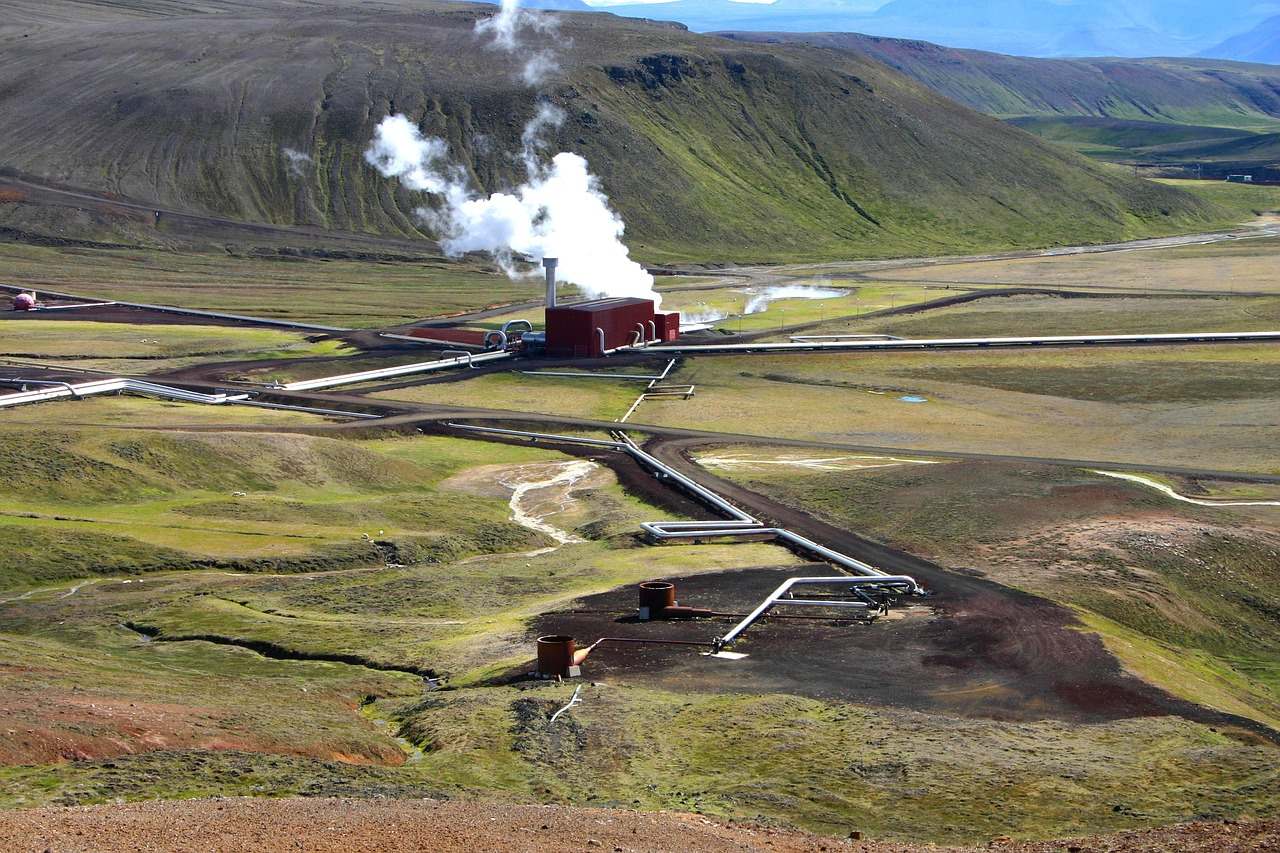
Engineers drill wells anywhere from a few feet to several miles deep to reach those reservoirs. The steam and very hot water that come up can then be put to work in several ways.
For power generation, EIA says the reservoirs are dry steam or hot water measuring 300°F to 700°F deep within the earth, as laid out in its February 2026 analysis.
Three ways people use heat from the earth
The Department of Energy groups geothermal uses into three families, described on its Geothermal Basics page:
- Electricity generation: fluid flows through hot rocks and absorbs their heat, which is drawn up through wells. That heat is converted to steam, which drives turbines that produce electricity.
- Heating and cooling: geothermal heat pumps use the ground as a heat sink when the air above is warmer and as a heat source when it is cooler. District systems extend the idea to groups of buildings, campuses and even entire communities.
- Direct use: wells, usually deeper than those for heat pumps, draw hot water straight to buildings or to industrial processes such as fish farming, greenhouses and drying pulp, paper and lumber.
The heat pump route is the one most households can picture, because it needs no volcano nearby. It relies on the steady temperature of the shallow subsurface rather than on a deep, scalding reservoir.
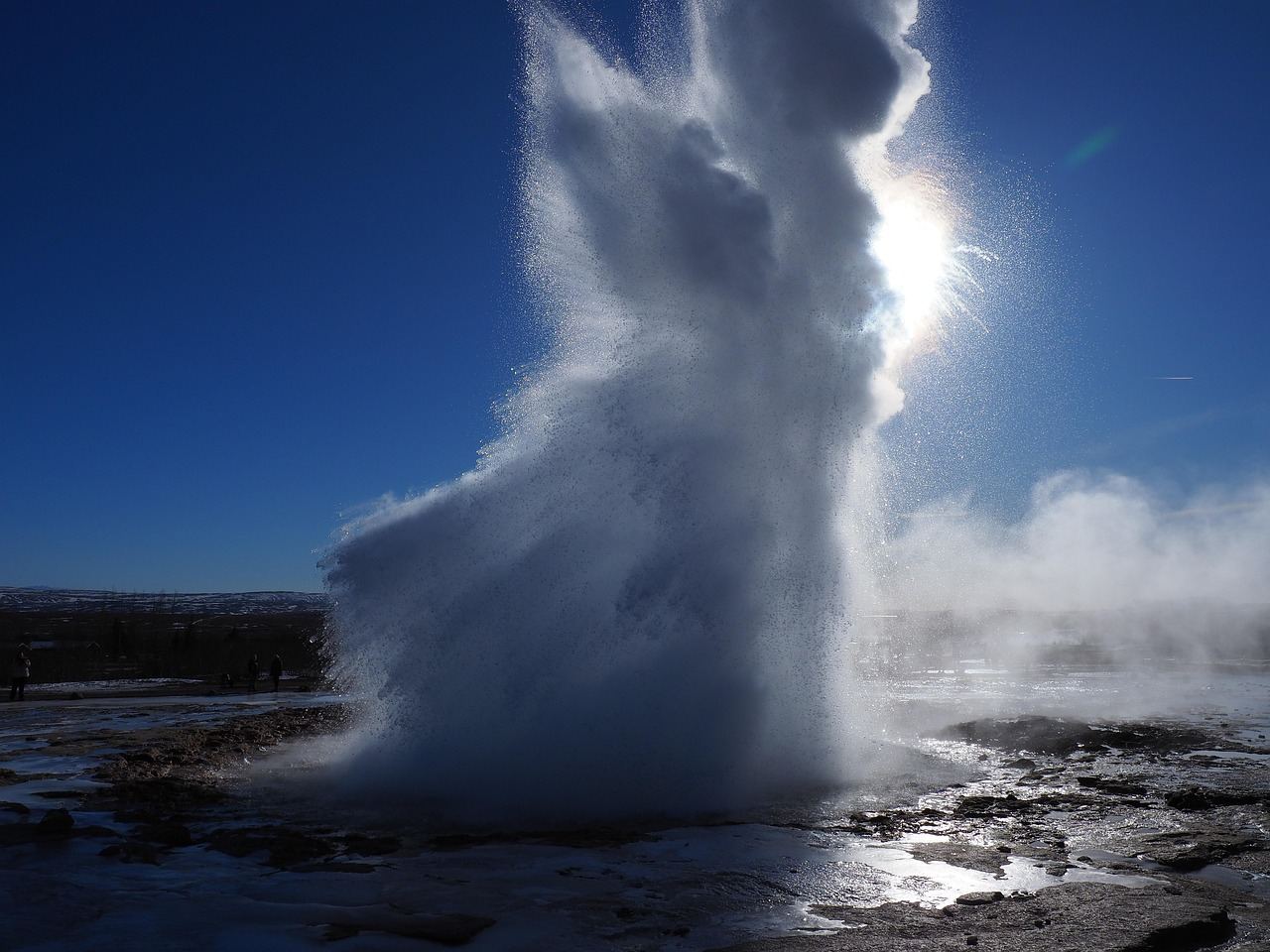
How conventional and enhanced geothermal systems differ
Conventional systems pump hot water or steam from natural hydrothermal reservoirs trapped in permeable, porous rock. EIA notes that these reservoirs are found in limited locations, typically near tectonic plate boundaries or volcanic hotspots.
Enhanced geothermal systems (EGS) borrow newer drilling methods from oil and gas production, such as horizontal drilling and fracking. The aim is to create a hydrothermal reservoir where none exists naturally.
If that works at scale, EIA says generators could be placed throughout the United States instead of only at a few western sites. Pilot projects have already shown that man-made wells can expand output at existing sites, according to the EIA analysis.
Where geothermal power stands in the United States
As of EIA’s February 19, 2026 report, the country had a total summer capacity of 2.7 gigawatts (GW) of conventional geothermal power. That is only 0.2% of U.S. summer generating capacity, according to the agency’s analysis.
The same report said Fervo Energy’s Cape Generating Station in Utah, under construction at the time, would be the first large-scale commercial EGS generator in the country. Its planned maximum capacity is 53 megawatts (MW), with 28 MW of net summer capacity, and it was scheduled to come online in June 2026.
EIA also listed two more generators of the same size at that location, expected to begin operation in January 2027. Further expansion is planned for 2028 after two power purchase agreements totaling 320 MW with Southern California Edison. Project schedules shift, so check for later updates.
Estimates of how far EGS could go vary by source:
- The U.S. Geological Survey estimates 135 GW of potential generation from EGS in the Great Basin of the Southwest alone.
- Other studies project up to 150 GW of cost-effective EGS power in the coming decades, depending on market dynamics and technology advances.
- In 2023, the National Laboratory of the Rockies estimated that 90 GW of EGS capacity could be economically built across the country by 2050.
The Department of Energy frames the upside more widely: potential for 90 gigawatts of electricity by 2050, plus more than 17,000 district heating systems and geothermal heat pumps equivalent to 28 million U.S. homes.
Benefits and challenges of geothermal energy
Geothermal has several strengths, drawn from EIA and the Department of Energy:
- Weather independence: EIA says geothermal power is carbon-free, renewable and continuous through the day and season, unlike wind and solar.
- Small land use: DOE says that over the 30 years commonly used to compare life cycle impacts, geothermal plants use less land than many other sources.
- Flexibility for remote places: rural and electrically islanded communities can use it for heating, cooling or small dispatchable power where grid connections and fuel are hard to get.
The hurdles are real. The elevated capital cost, especially for well construction, is one of the main challenges for both conventional and enhanced systems, EIA reports. Induced seismicity (man-made earthquakes) and the difficulty of modeling deep sites are others.
Research is tackling both. The Utah Frontier Observatory for Research in Geothermal Energy (FORGE), sponsored by the Department of Energy, is a field laboratory for testing how EGS reservoirs are created and managed.
If you are weighing geothermal against other options, our explainers on hydropower and biomass energy cover two more renewable sources.
Frequently asked questions
Does geothermal energy work everywhere?
Show answer
Not for hot-reservoir power plants, which depend on natural reservoirs in a few regions. Heat pumps are far less picky because they use the ground’s temperature near the surface, and EGS aims to build reservoirs in places that lack them.
Can geothermal produce anything besides electricity and heat?
Show answer
Possibly lithium. The Department of Energy says the brines used in geothermal power production can yield this critical mineral, which batteries and electric vehicles need, giving a domestic supply (Geothermal Basics).
Who else is building enhanced geothermal projects?
Show answer
EIA’s February 2026 report says the Department of Defense partnered with six developers to power military bases in several states. Meta signed with developer SAGE for up to 150 MW for its data centers, and Rodatherm Energy Corp. expects its closed-loop pilot to be operational by January 2028.