Wondering how hydropower works? It turns moving water into electricity through dams, run-of-river diversions or pumped storage, each built for a different job.
Hydropower is one of the oldest members of the wider family of renewable energy, and this page explains how its main plant types differ.
| Item | Value |
|---|---|
| Hydro share of U.S. utility-scale electricity generation, 2025 | About 5.6% |
| Hydro share of U.S. utility-scale renewable generation, 2025 | 23.1% |
| U.S. dams that produce power | Less than 3% of more than 90,000 dams |
| DOE definition of a large hydropower plant | More than 30 megawatts (MW) |
| DOE definition of a small hydropower plant | Between 100 kilowatts and 10 MW |
These figures come from the U.S. Energy Information Administration and the U.S. Department of Energy. They can change, so check those pages before you rely on them.
How hydropower turns moving water into electricity
The EIA explains that the volume of water flow and the change in elevation, often called head, decide how much energy the water holds. In general, the greater the flow and the higher the head, the more electricity a plant can produce.
Inside a plant, the process follows a simple chain:
- Water flows through a pipe called a penstock.
- It pushes against blades in a turbine and makes them spin.
- The spinning turbine powers a generator, which produces electricity.
All of this depends on the water cycle. Sunlight evaporates water from rivers, lakes and oceans, the vapor falls as rain and snow, and the runoff collects in streams again. The EIA notes that seasonal swings in precipitation, and long-term shifts such as droughts, can strongly affect how much hydropower is available.
For a rough sense of scale, the Union of Concerned Scientists offers a rule of thumb: one gallon of water per second falling one hundred feet can generate one kilowatt of electricity.
If you like comparing machines, a companion guide answers the question how do wind turbines work using a different fuel but a similar turbine-and-generator idea.
Dams, run-of-river and pumped storage compared
The Department of Energy sorts hydropower facilities into three types:
- Impoundment, which uses a dam and a reservoir.
- Diversion, often called run-of-river.
- Pumped storage, which moves water between two reservoirs.
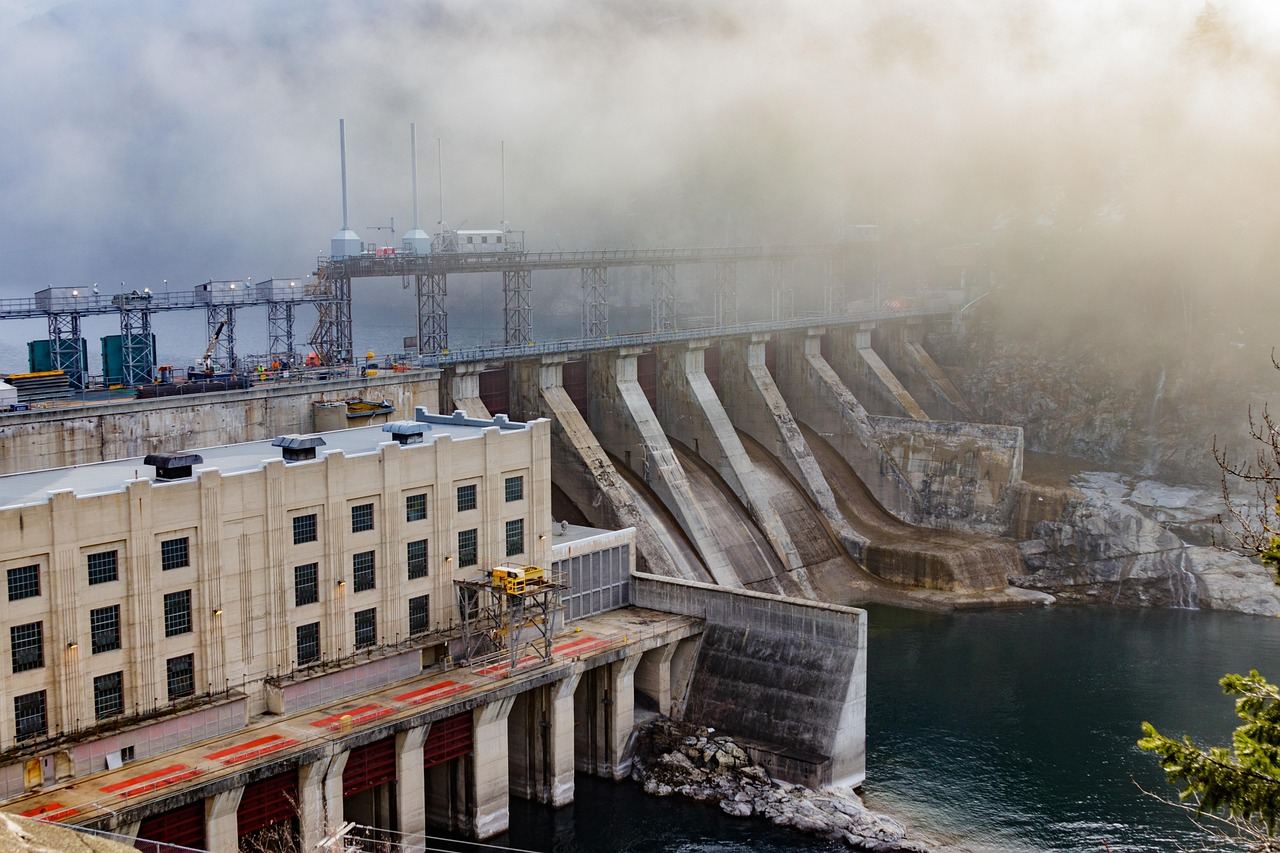
The most common type is the impoundment facility. It typically uses a dam to store river water in a reservoir, and water released from that reservoir spins a turbine. Operators can time the release to meet changing electricity needs, or other needs such as flood control, recreation and fish passage.
A diversion channels part of a river through a canal or penstock and uses the natural drop of the river bed to make power. According to the DOE, it may not need a dam at all. The Stanford Understand Energy hub adds that run-of-river systems are less flexible than storage systems, because their output follows the rises and falls of the natural river flow.
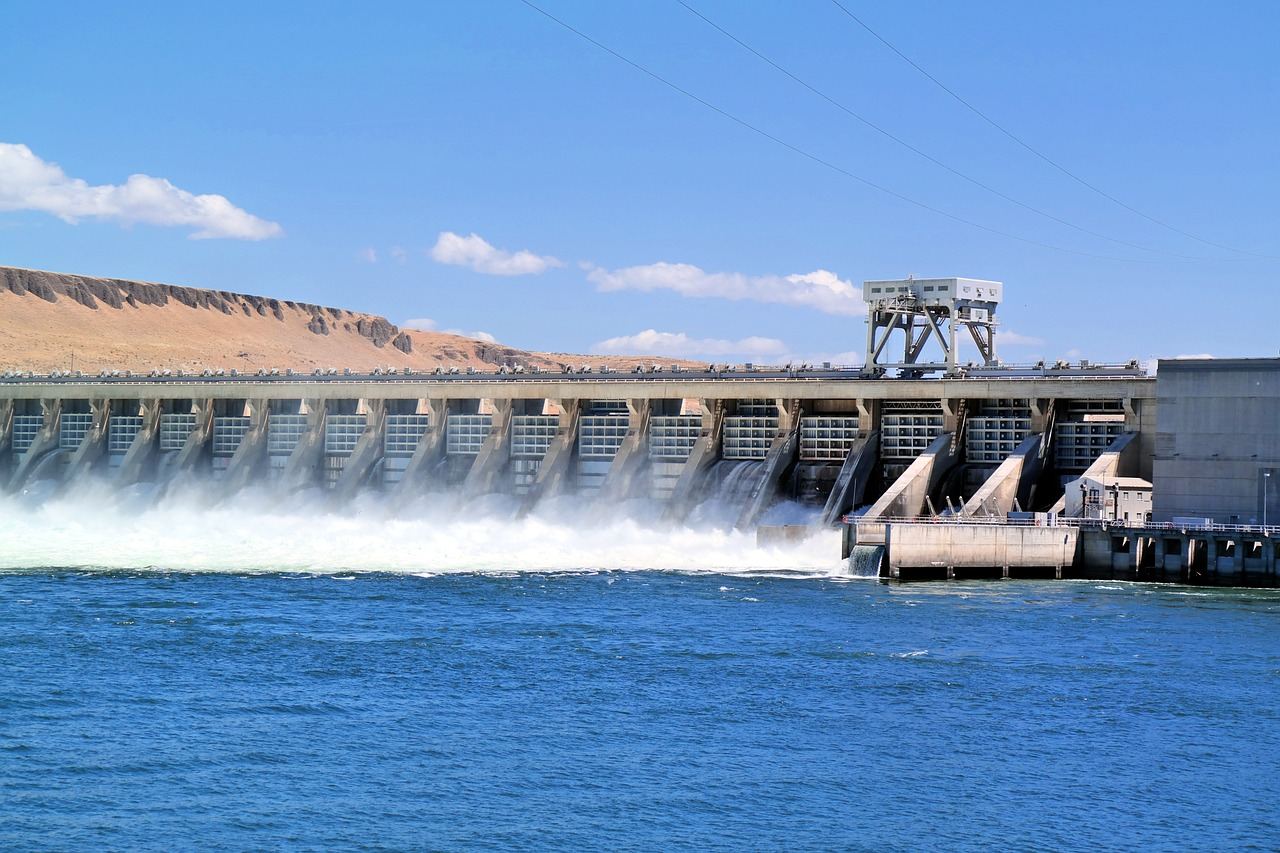
Stanford describes the trade-off plainly: storage in reservoirs gives flexibility about when electricity is generated, but it can disrupt the local environment. Run-of-river plants usually disturb the river less, though they can still block fish passage, alter water temperature and flood vegetation.
Pumped storage: a battery made of water
The DOE says pumped storage hydropower works like a giant battery. Such a facility can store electricity generated by other sources, like solar, wind and nuclear, for later use. When demand is low, it pumps water from a lower reservoir to an upper one, and when demand is high, the water runs back down through a turbine.
The EIA’s Energy Kids page notes that these plants usually pump when wholesale electricity prices are relatively low. They release the stored water at peak times, when prices are relatively high.
Stanford puts the round-trip efficiency at about 80%, meaning roughly 80% of the energy used to pump water uphill can be converted back into electricity. It also separates closed-loop systems, with two stand-alone reservoirs, from open-loop systems, where one reservoir stays connected to a naturally flowing river or lake.
How large is hydropower in the United States?
Size labels vary, but the DOE uses these ranges:
- Large: more than 30 megawatts (MW).
- Small: between 100 kilowatts and 10 MW.
- Micro: up to 100 kilowatts, enough for a single home, farm, ranch or village.
In 2025, hydroelectricity supplied about 5.6% of U.S. utility-scale electricity generation and 23.1% of utility-scale renewable generation, according to the EIA. The same page says hydropower was one of the first energy sources used to generate electricity.
The EIA’s Energy Kids page puts total U.S. conventional hydroelectricity net summer generation capacity in 2025 at about 79,892 megawatts (MW), or about 80 million kilowatts. About one-half of that capacity sits in Washington, California and Oregon. Washington is home to the Grand Coulee Dam, the largest U.S. hydropower facility.
Most dams do not make power. Per the DOE, of the more than 90,000 dams in the United States, less than 3% produce electricity, while the rest serve recreation, farm ponds, flood control, water supply and irrigation.
The history is long too. The same EIA Energy Kids page records that the first U.S. hydroelectric plant to sell electricity opened on the Fox River near Appleton, Wisconsin, on September 30, 1882.
What are the environmental trade-offs?
Running a plant produces no air pollution or greenhouse gas emissions, the Union of Concerned Scientists says. Building the dam is another matter: blocking rivers can degrade water quality, damage aquatic and riparian habitat, block migratory fish passage and displace local communities.
Stanford lists further barriers, including flooding of terrestrial habitat, seismic impacts from large reservoirs, and competing downstream uses for water. Because of these effects, the UCS argues that the benefits and drawbacks of any proposed project must be weighed before it moves forward.
Readers who want to see how another resource is tapped can turn to our guide to geothermal energy, which covers a different kind of renewable power.
Frequently asked questions
Is hydropower a fully renewable resource?
Show answer
The Stanford Understand Energy hub calls it semi-renewable. Its reasoning is that operators must manage the resource carefully so water is not used faster than nature can replenish it.
Can a hydropower plant run without a dam?
Show answer
Yes. Diversion plants can work without one, according to the DOE. Stanford adds that some run-of-river designs hold a small amount of water, called pondage, while others store none.
Does pumped storage generate more electricity than it uses?
Show answer
No. The EIA explains that pumped-storage systems generally use more electricity to lift water than they get back from it, so their net generation balance is negative. Their value comes from shifting energy to the hours when it is needed.
Was hydropower once the top U.S. renewable source?
Show answer
Yes. The EIA says it led annual U.S. renewable electricity generation until 2019, when wind generation surpassed it.